There's a moment, somewhere between the descent into Galeão Airport and your first glimpse of Guanabara Bay below, when Rio de Janeiro stops being a place you've seen in photographs and becomes something viscerally, undeniably real.
The city sprawls impossibly between mountains and ocean, a collision of green peaks and terracotta rooftops and silver water that no travel documentary has ever quite captured. Even from the air, you can feel it - that particular electricity that has drawn travellers, artists, and dreamers to the Cidade Maravilhosa for centuries.
Then you land. And Rio, as it tends to do, immediately humbles you.
This is a city of extraordinary contrasts. The same neighbourhood that hides a vine-draped colonial mansion also conceals a street you shouldn't wander down after dark. The samba drifting out of a bar in Lapa is one of the most intoxicating sounds on earth - but finding that bar, knowing which one is the real deal and not a tourist facsimile, is harder than it sounds when you don't speak Portuguese.
Rio rewards the curious.
It rewards those who go deeper, who get lost in the right way, who have someone beside them pointing to a crumbling wall and saying, this is where the story actually begins.
The city's reputation for safety is, to put it diplomatically, complicated. Its reputation for beauty is not. Neither is its capacity to deliver one of the most profound travel experiences of your life, if you approach it well.
Which raises the question that every first-time visitor to Rio eventually lands on: what's the smartest way to actually see this city, and the breathtaking region surrounding it? Are private tours of Rio de Janeiro the answer? Or are you just as well off going it alone?
That depends.
And by the end of this guide, you'll know exactly which side of that answer you fall on.

The Safety Reality: What No One Tells You Before You Go
Let's address the elephant in the room - or more accurately, the elephant that's been sitting in the room since someone first mentioned you were going to Rio.
Yes, Rio de Janeiro has a complicated relationship with safety. It always has. The city's favelas, its inequality, its sporadic violent crime - these are real, documented, and not something any honest travel guide should wave away with a breezy "just use common sense!" But here's what the alarming headlines consistently fail to capture: millions of tourists visit Rio every year, and the overwhelming majority leave with nothing worse than sunburn and an empty wallet from buying too many caipirinhas. The risks are real but highly localised - and largely avoidable with the right guidance.
The problem is that "right guidance" is harder to come by than you'd think.
Rio is not a city that forgives navigational mistakes the way, say, Lisbon or Tokyo might. Wander slightly off-course in the wrong neighbourhood after dark, and the consequences can be serious. The boundaries between a perfectly safe street and an inadvisable one can be invisible to the untrained eye - no signs, no obvious markers, just local knowledge that takes years to accumulate. First-time visitors, particularly those arriving from countries where public spaces feel uniformly safe, often underestimate this.
Then there's the language barrier, which is genuinely underappreciated as a risk factor. Brazil is one of the few major travel destinations in the world where English is spoken minimally outside of hotels and high-end restaurants. Portuguese - specifically Brazilian Portuguese, with its own rhythms and regional quirks - is the operating language of daily life. Street signs, bus routes, market vendors, taxi drivers, locals giving directions: almost none of it comes in English. In a city as complex and layered as Rio, navigating without the language isn't just inconvenient. It can put you in situations you didn't intend to be in.
A private guide changes this equation entirely. Not by wrapping you in cotton wool and steering you away from anything real - quite the opposite. A knowledgeable local guide gives you access to parts of Rio that most tourists never reach, precisely because they have the language, the relationships, and the street-level intelligence to do it safely. You're not trading adventure for security. You're trading anxiety for confidence, and that's a very different thing.
The practical logistics matter too. A reputable private tour means door-to-door pickup from your hotel in a clean, air-conditioned vehicle. No deciphering bus routes. No negotiating with unlicensed taxis. No standing on a street corner with Google Maps open, broadcasting to everyone around you that you have absolutely no idea where you are. These things sound minor until you're tired, jetlagged, and trying to get from Santa Teresa to Ipanema at dusk.
Rio's complexity is part of what makes it extraordinary. But it's also exactly why having the right person beside you - someone who was born here, grew up here, and genuinely loves this city - makes such a profound difference to how you experience it.

Do Private Tours of Rio de Janeiro Beat the Alternatives?
Once you've accepted that Rio deserves more than a wing-and-a-prayer approach, the next question is what kind of tour actually delivers. And here the travel industry, as it so often does, offers a spectrum ranging from genuinely excellent to quietly disappointing.
At one end: the large group bus tour. You'll find them advertised everywhere, and on paper they look reasonable - a full day, multiple stops, a price that seems fair. In practice, you're sharing a coach with 35 strangers moving on a schedule designed around the slowest member of the group, stopping for exactly 45 minutes at Christ the Redeemer before being herded back aboard so the driver can make the next pickup. You see the landmarks. You photograph them. You leave with a vague sense that Rio is famous for being beautiful, which you already knew before you arrived.
At the other end: going entirely solo. In many cities, this is the right call - wander freely, get lost productively, stumble onto something wonderful. Rome rewards this. Kyoto rewards this. Rio, for all its magic, is genuinely harder to unlock without local knowledge and language. The authentic experiences - the right samba bar, the hidden viewpoint, the neighbourhood that feels like the real city rather than a curated version of it - require context that most visitors simply don't have time to accumulate during a one-week trip.
Private tours of Rio de Janeiro sit squarely between these two options, and when done well, they offer the best of both worlds: the freedom and flexibility of independent travel, with the knowledge and access that only a local can provide.
The difference between a good private tour and a great one usually comes down to the guide. Rio Cultural Secrets, led by Fabio Mendonça - a native Carioca who has been guiding visitors through his city for over 14 years - is a useful benchmark for what great looks like. Featured in Fodor's Travel Guide and consistently rated 5 stars on TripAdvisor, Fabio has introduced travellers from more than 30 countries to a Rio that rarely makes it into the glossy brochures. Every tour is handled personally, from the first email through to the drop-off at the end of the day - no call centres, no outsourcing, no strangers being mixed into your "private" tour at the last minute.
That personal consistency matters more than it might seem.
When one person is responsible for your entire experience - and their reputation depends entirely on it - the quality of attention is categorically different from anything a large tour operator can provide. Groups are kept small, itineraries are built around your interests, and the pace is yours to set. Families with young children, solo travellers, seniors, honeymooners - the tour adapts, rather than the traveller contorting themselves to fit a predetermined programme.
This is Rio on your terms. Which, as it turns out, is the best way to experience it.

The Full Experience: What Private Tours of Rio de Janeiro Actually Cover
One of the most common misconceptions about private tours is that they're essentially the same itinerary as a group tour, just with fewer people on the bus. In Rio, that couldn't be further from the truth. The range of experiences available through a well-connected private guide is genuinely broad - and the depth at which you experience each one is incomparable.
The Icons, Done Properly
Every Rio visit starts with the landmarks, and rightly so. Christ the Redeemer is one of those rare monuments that earns its fame - standing beneath it, arms outstretched over a city of seven million people, is a genuinely moving experience rather than just a photo opportunity. Sugar Loaf Mountain, rising from the water at the entrance to Guanabara Bay, delivers panoramic views that reframe the entire city's geography. Copacabana and Ipanema are beaches unlike any other urban shoreline on earth - not just beautiful, but alive with a particular Carioca energy that rewards lingering.
The difference a private guide makes here isn't access to the sites themselves - it's timing, context, and the stories that turn a landmark into something that actually stays with you. Arriving at Christ before the tour buses, understanding the social history baked into Ipanema's famous mosaic promenade, knowing which café on Copacabana has been serving the same recipe since the 1950s - these details are the texture of real travel.
A Historic Tour of Rio: The City Beneath the City
Beyond the beaches and viewpoints lies a Rio that most visitors never reach: the historic centre, where the city's layered and often painful past is written into the architecture. A historic tour of Rio takes you through Centro Histórico, past the soaring arches of Lapa, and into the cobblestoned streets that were once the beating heart of colonial Brazil. The Royal Portuguese Reading Room alone - a gilded, cathedral-like library hidden inside an ordinary city block - is worth the detour.

Perhaps the most significant stop on any historic tour of Rio is Little Africa. The port district known as Pedra do Sal was the point of arrival for an estimated one million enslaved Africans brought to Brazil - the largest forced migration in history. Today it's a site of cultural reclamation and community pride, where African heritage is preserved in music, food, and ceremony. Visiting with a guide who understands this history, and conveys it with the weight it deserves, is a fundamentally different experience from reading about it in a guidebook.
Santa Teresa and the Street Art Scene
Perched on a hillside above the city, Santa Teresa is Rio's bohemian soul - a neighbourhood of steep cobblestone lanes, crumbling colonial mansions draped in bougainvillea, and an artistic community that has been quietly making things here for decades. It's also home to some of the finest street art in South America, including the world-famous Escadaria Selarón: a cascading staircase of hand-painted tiles created over twenty years by Chilean artist Jorge Selarón, who considered it his gift to the Brazilian people.

A dedicated street art tour through Santa Teresa and surrounding neighbourhoods introduces you to living artists, the stories behind specific murals, and a creative ecosystem that exists entirely outside the tourist circuit. This is Rio's contemporary culture, raw and unfiltered.
Samba Nights and Rio After Dark
Daytime Rio is spectacular. Nighttime Rio is something else entirely. The by-night private tour navigates the city's after-dark landscape with the confidence of someone who has spent fourteen years knowing exactly which door to walk through. Live samba in venues where the crowd is almost entirely local, caipirinha bars tucked down alleys that don't appear on any map, the particular joy of a city that genuinely comes alive after sunset - this is the Rio that Cariocas themselves inhabit, and it's where the city's soul is most visible.

Wildlife, Rainforest, and the Natural World
What surprises most visitors is that Rio is also, improbably, a nature destination. Tijuca National Park - one of the largest urban forests in the world - sits directly behind the city, a vast sweep of Atlantic rainforest teeming with toucans, howler monkeys, and cascading waterfalls. Private wildlife tours and rainforest trail experiences here are a world away from the beach, literally and atmospherically. For families with children, nature lovers, or anyone who needs a few hours of green silence after the sensory intensity of the city, Tijuca is a revelation.

A Tour for Every Traveller
What makes private tours of Rio de Janeiro genuinely accessible - rather than just theoretically flexible - is how thoroughly they can be shaped around the person taking them. Families with young children need shorter walking distances, earlier starts, and stops that hold a ten-year-old's attention; that's a completely different itinerary from a solo traveller who wants to spend four hours in the historic centre followed by a late samba night. Seniors may want a more relaxed pace with longer rest stops; honeymooners might want a sunset tour capped with a private dinner recommendation. A good private guide doesn't just tolerate these differences - they design around them.
Day Trips from Rio de Janeiro: The Region Most Visitors Never See
Rio de Janeiro, the city, is extraordinary. Rio de Janeiro, the state, is something most visitors fly home without ever discovering, which is a genuine shame, because within 2 hours of your hotel lies some of the most varied and spectacular scenery in South America.
The beauty of combining private tours with day trips from Rio de Janeiro is that the same qualities that make a private guide invaluable inside the city - local knowledge, seamless logistics, no language fumbling - apply equally on the road out of it. Hotel pickup, comfortable private transport, a bilingual guide for the full journey: the experience is continuous, and the only thing that changes is the landscape rolling past the window.
Here are the destinations worth knowing about.
The Petrópolis Day Trip: Imperial Grandeur in the Mountains
Roughly 65 kilometres north of Rio, the road climbs steeply into the Serra Fluminense mountains and the air does something that feels almost miraculous after days in Rio's coastal heat - it cools. Petrópolis was Brazil's imperial summer capital, the mountain retreat where Emperor Pedro II escaped the humidity of Rio to govern, philosophise, and tend his beloved gardens. That history is preserved in extraordinary detail, and a Petrópolis day trip is the single best introduction to Brazil's imperial era available anywhere.

The Imperial Museum - Pedro II's summer palace, now immaculately maintained - houses the Portuguese crown jewels, royal carriages, and personal effects that bring the 19th century into sharp focus. The Crystal Palace, a prefabricated iron-and-glass greenhouse shipped from France in 1884, sits in manicured gardens that feel lifted from another continent entirely. The city's wide boulevards and European-influenced architecture reflect the cosmopolitan ambition of a court that genuinely believed Brazil would become one of the world's great empires.
Beyond the history, Petrópolis offers excellent craft beer, strong mountain coffee, and a pace of life that's a welcome counterpoint to Rio's intensity. It's the kind of place that rewards half a day of genuinely unhurried wandering - which is precisely what a private tour allows.
Ilha Grande: The Island That Time Forgot
Two hours southwest of Rio lies an island with no cars, no motorbikes, and - in the best possible sense - almost nothing to do except be somewhere staggeringly beautiful. Ilha Grande spent much of the 20th century as the site of a maximum-security prison, which inadvertently preserved its Atlantic rainforest and coastline from the development that consumed most of Brazil's accessible shoreline. The prison closed in 1994. The island has been a protected area ever since.
Today, Ilha Grande's emerald bays, jungle trails, and crystalline water make it one of Brazil's most beloved natural escapes. Lopes Mendes beach - a 3-kilometre sweep of white sand backed by dense forest - consistently ranks among the finest beaches in the country. As a day trip from Rio de Janeiro, it's ambitious but absolutely doable, and for many visitors it becomes the single most memorable day of their entire trip.
Arraial do Cabo: Brazil's Caribbean
If Ilha Grande is dramatic, Arraial do Cabo is simply, almost unfairly, beautiful. The water here - a collision of cold Atlantic currents with warm coastal shallows - turns a shade of blue-green that looks digitally enhanced until you're actually floating in it. The beaches, particularly Praia do Farol, have the white sand and clarity of somewhere in the Maldives, without the 14-hour flight or the resort pricing.
Snorkelling here, with visibility that can exceed ten metres on a calm day, reveals a rich marine ecosystem that most people have no idea exists this close to a major city. It's the kind of place that makes you quietly rearrange your preconceptions about what Brazil actually is.
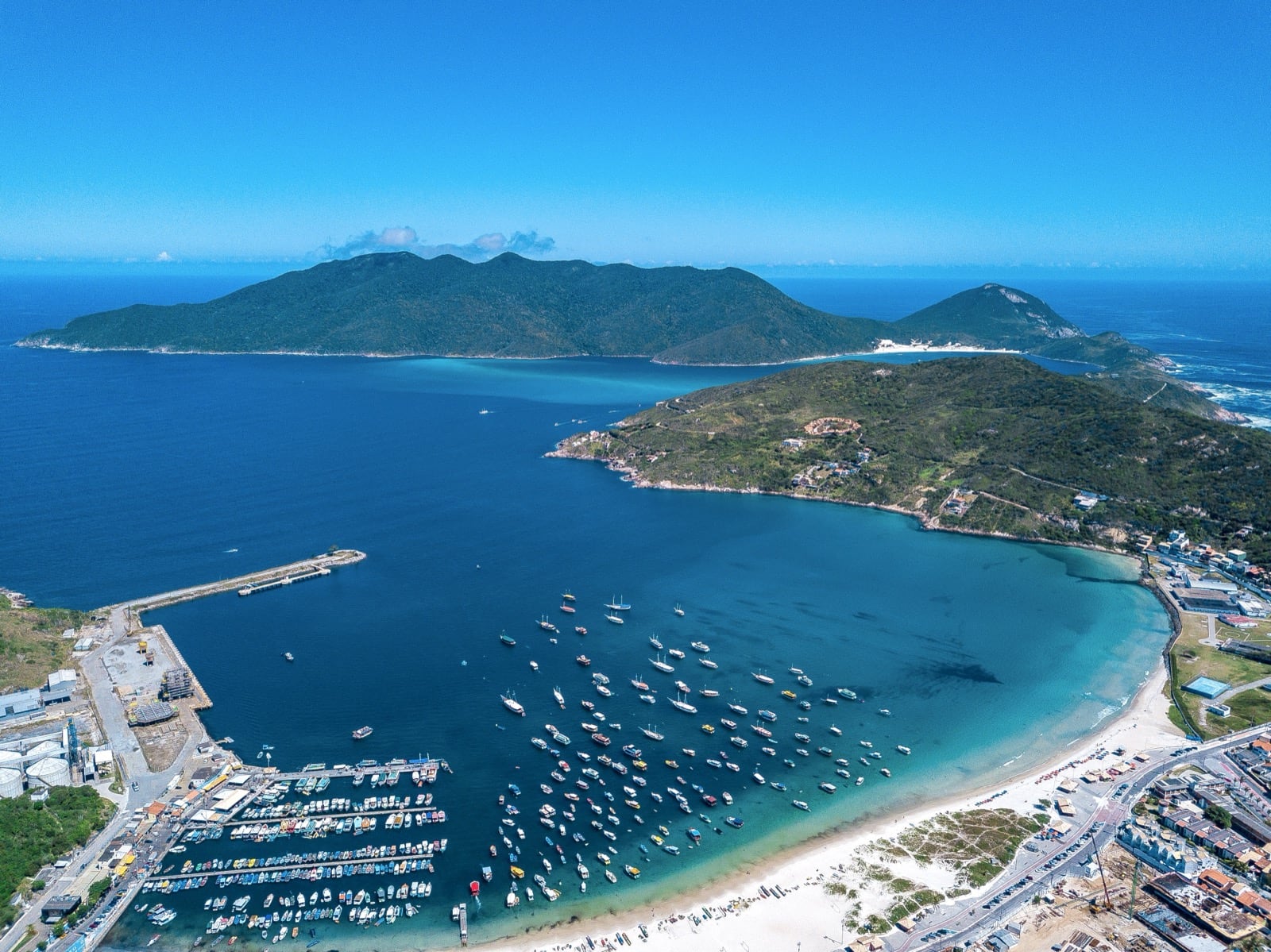
Búzios: Glamour on the Peninsula
About 170 kilometres east of Rio, the Búzios peninsula curves into the Atlantic like an afterthought, trailing 23 beaches behind it in a string of coves and headlands. Brigitte Bardot discovered it in 1964 and promptly told everyone, which is both the best and worst thing that ever happened to it. The result is a town that is simultaneously charming and self-consciously chic - boutique pousadas, excellent seafood restaurants, cobblestone streets lined with art galleries - but which retains enough genuine beauty to justify the reputation.
As a day trip from Rio de Janeiro, Búzios works best as a slower, more indulgent counterpoint to the city's intensity. Arrive mid-morning, have a long lunch, walk the Orla Bardot waterfront promenade, and catch the sunset from a headland. Simple, beautiful, memorable.
Serra dos Órgãos: For Those Who Want to Earn the View
Named for the pipe-organ silhouette of its dramatic quartzite peaks, Serra dos Órgãos National Park is where serious hikers and nature lovers disappear for a day and emerge looking quietly transformed. The park's Atlantic cloud forest - moss-draped, fog-threaded, alive with endemic species - is among the most biodiverse ecosystems on the planet. The famous Dedo de Deus (God's Finger) peak is one of the most recognisable rock formations in Brazil.

Trails range from accessible forest walks suitable for most fitness levels to demanding multi-hour ascents for those who want a genuine challenge. A wildlife tour here, guided by someone who knows where the toucans feed in the morning and which trail leads to the best waterfall, is a categorically different experience from following a tourist map alone.
Niterói: The Underrated City Across the Bay
Directly across Guanabara Bay from Rio, connected by a 16 km bridge and a regular ferry, Niterói is the day trip that sophisticated Rio visitors tend to discover on their second or third visit. The draw is primarily architectural: Oscar Niemeyer's Museu de Arte Contemporânea, a flying-saucer-shaped building perched on a clifftop above the bay, is one of the most photogenic structures in South America and one of the great works of 20th-century architecture. The views back across the bay to Rio's skyline, with Christ the Redeemer presiding over everything, are among the best in the entire region - and almost entirely free of the crowds you'd find at the more famous viewpoints.

Niterói is close enough for a half-day, rewards combining with a Rio afternoon, and is the kind of discovery that makes you feel like you've found something the guidebooks underplayed. Which, largely, you have.
How to Choose the Right Private Tour in Rio de Janeiro
The private tour market in Rio, like most major tourist destinations, contains multitudes. At the top end, you'll find licensed, experienced operators with verifiable track records and genuine local expertise. Further down the spectrum, you'll find people with a car, a phone, and a TripAdvisor account created last Tuesday. Knowing how to tell them apart before you hand over your money - and your entire day - is worth spending a few minutes on.
What to Look For
The first filter is licensing. Brazil requires tour operators to hold official credentials, and a legitimate company will display them without hesitation. If the operator's website is vague about their status, that vagueness is itself informative.
Guide quality is the second, and arguably more important, consideration. The single greatest variable in any private tour experience is the person standing next to you explaining things.
Look for guides who are native to the city rather than simply resident in it - there's a meaningful difference between someone who grew up navigating Rio's social and cultural landscape and someone who learned it from a training manual. Language fluency matters too: a guide whose English is genuinely strong, rather than functional-but-strained, transforms the experience from informative to genuinely engaging.
Reviews tell you more than any marketing copy. Look for consistent patterns across a substantial number of reviews rather than a handful of glowing testimonials - anyone can curate 6 good ones. Pay attention to what reviewers say about the guide specifically: did they feel safe? Did the itinerary flex when they needed it to? Did they come away knowing things they couldn't have learned from a book?
Flexibility and transparency around pricing are the final practical markers. A reputable operator will be clear about what's included - transport, guide fees, entrance tickets - and what isn't, without burying the extras in fine print. Customisation should be offered genuinely, not just as a marketing claim.
The final consideration is one that's easy to overlook but increasingly important: responsible tourism. Rio is a city of extraordinary beauty and equally extraordinary complexity — sensitive ecosystems, a profound and often painful history, and deeply unequal social realities that coexist within the same postcode. How a tour operator navigates all of those matters. The best operators actively support local communities by directing spend toward local restaurants, artists, and businesses rather than corporate intermediaries. They educate rather than exploit — approaching Afro-Brazilian history, favela communities, and indigenous heritage with genuine respect rather than treating them as exotic backdrops for tourist photographs. They keep group sizes small to reduce the environmental and social footprint of each visit, and they operate ethically within natural parks and sensitive sites, without cutting corners for convenience.

Red Flags Worth Knowing
Be cautious of any tour marketed as "private" that mentions the possibility of joining other travellers. Private means private - one group, one guide, one itinerary. If the operator is vague about group size, ask directly.
Pressure booking tactics are another warning sign. Legitimate operators, particularly those with strong reputations, don't need to manufacture urgency. If you're being pushed to commit before you've had time to ask questions, that dynamic is unlikely to improve once the tour begins.
Finally, be wary of operators who can't or won't give you a specific guide's name and background before you book. With smaller, reputable operations, the guide is the product - and knowing who you'll be spending the day with is a perfectly reasonable thing to ask.
Matching Tours to Your Trip Length
With 2 or 3 days in Rio, prioritise the city itself: one full-day city tour covering the major landmarks, and one half-day focused on whichever experience resonates most - the historic centre, Santa Teresa, a samba night. Don't overload the schedule; Rio rewards a slower pace more than most cities.
With 5 to 7 days, the calculus opens up considerably. Add 1 or 2 day trips from Rio de Janeiro - a Petrópolis day trip pairs beautifully with a wildlife tour of Tijuca, for example - and leave at least one day entirely unscheduled. The best moments in Rio are often the ones that weren't on any itinerary.
Why Rio Cultural Secrets Stands Out
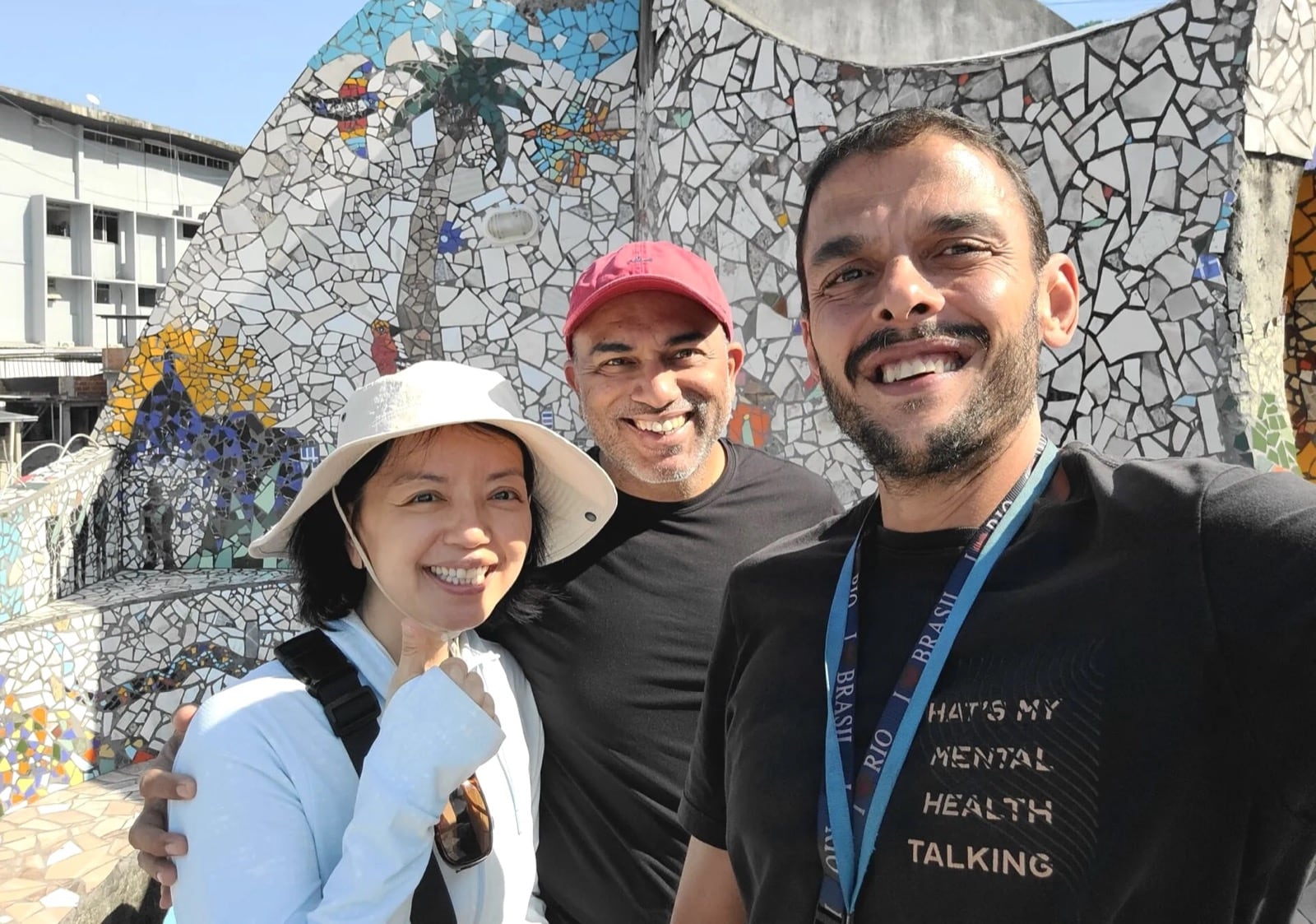
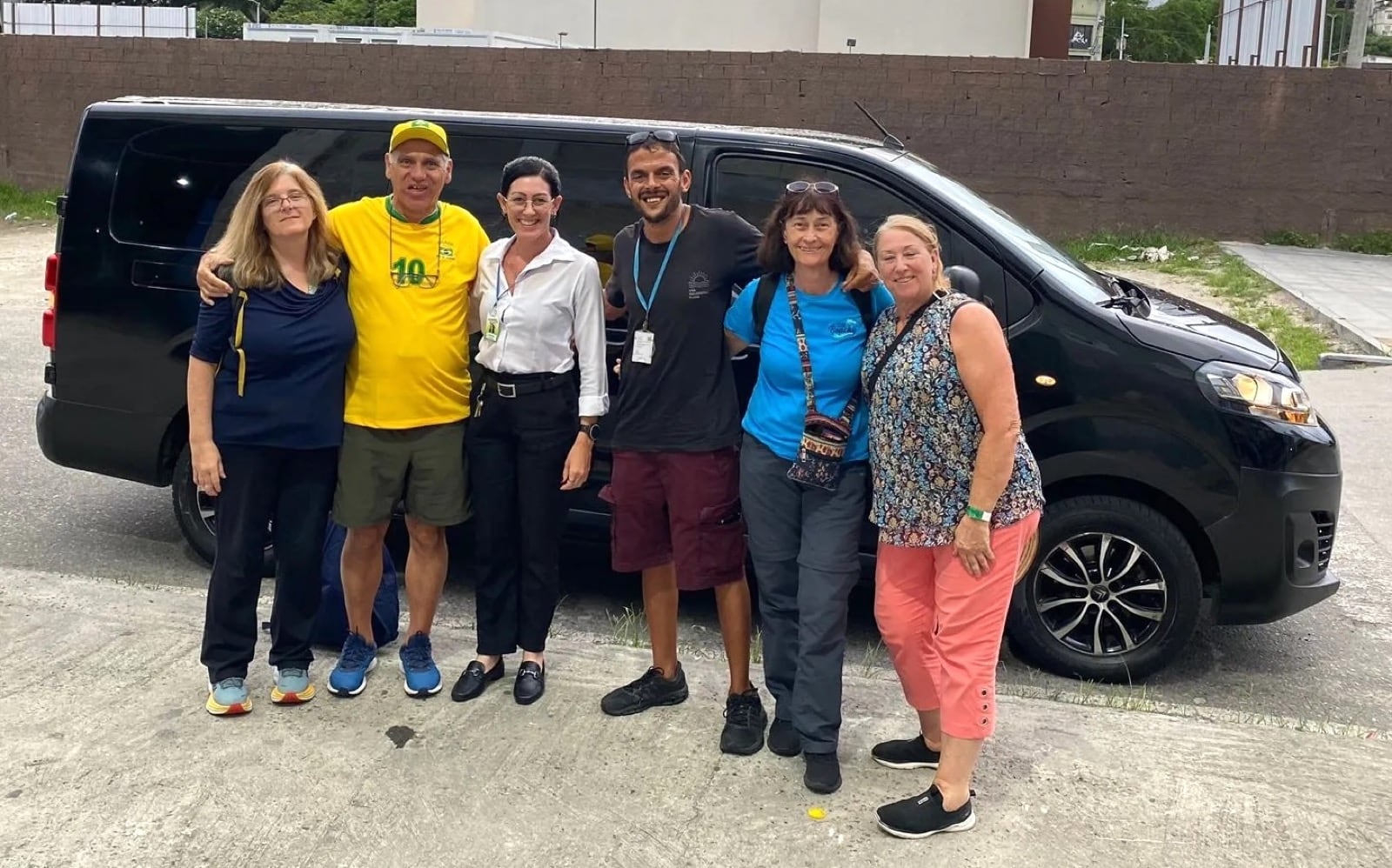
Rio Cultural Secrets is the kind of operation that makes the above checklist easy to work through, because it ticks every box without needing to be asked. Fabio Mendonça - the sole guide, native Carioca, and the person who will answer your first email and be standing at your hotel door on the morning of your tour - has been doing this since 2012. He has guided travellers from more than 30 countries through the city he grew up in, been featured in Fodor's Travel Guide, and built a 5-star reputation on TripAdvisor through the straightforward method of being genuinely excellent at what he does.
The operation is deliberately small. Tours accommodate up to 6 people for standard private tours, with options for slightly larger private groups. Every itinerary is customisable - contact via the website, email, WhatsApp, Facebook or Instagram, describe what you're hoping for, and Fabio will build something around it. There are no call centres, no junior guides covering for the person whose name is on the website, no disconnection between what's promised and what's delivered.
Rio Cultural Secrets is a member of both the Latin America Travel Association (LATA) and the Adventure Travel Trade Association, which require adherence to responsible tourism standards. That kind of accountability doesn't happen by accident.
For independent travellers who value quality over convenience and authenticity over efficiency, it's a natural fit. Browse the full range of tours at rioculturalsecrets.com, or reach out directly to discuss a custom itinerary.
Practical Planning Tips: Getting the Most Out of Rio
Knowing what to see is half the equation. Knowing when to go, what to bring, and what to expect logistically is what separates a smooth, memorable trip from one spent troubleshooting avoidable problems.
When to Visit
Rio sits in the Southern Hemisphere, which means its seasons run opposite to Europe and North America. December through March is summer - hot, humid, and extraordinarily lively. Carnival, which falls in February or early March depending on the year, is one of the greatest spectacles on earth and worth experiencing at least once. It also means peak crowds, peak prices, and a city operating at a frequency that can be overwhelming even for seasoned travellers. Book private tours several months in advance if you're visiting during Carnival; availability disappears fast.
April through June is widely considered the sweet spot. The humidity drops, the crowds thin, the light turns golden in the late afternoon, and Rio settles into a rhythm that feels more like the city Cariocas actually inhabit year-round. Temperatures remain warm - typically between 22 and 28 degrees Celsius - and the main attractions are accessible without the shoulder-to-shoulder experience of peak season. For first-time visitors with flexibility over dates, this window is the recommendation.
July and August bring cooler, drier conditions and a modest uptick in domestic Brazilian tourism during school holidays. September through November is another comfortable window - spring in the Southern Hemisphere, with warming temperatures and reliably good weather before the summer humidity builds again.
How Far Ahead to Book
For standard private city tours outside of peak season, 2 to 3 weeks' notice is generally sufficient with a reputable operator. For day trips from Rio de Janeiro - particularly to Ilha Grande or Arraial do Cabo, which involve ferry logistics and tighter scheduling - aim for 3 to 4 weeks minimum. During Carnival and the Christmas-New Year period, treat private tour availability like a flight or hotel and book as early as possible, ideally 2 to 3 months ahead.
What's Typically Included - and What Isn't
Most reputable private tours include the guide's fee, private transport, and hotel pickup and drop-off. What they typically don't include are entrance fees to major attractions, which can add up more quickly than expected. Budget approximately US$50 to $100 per person per day to cover site entries - Christ the Redeemer, Sugar Loaf, and the Imperial Museum in Petrópolis each carry their own admission costs. Meals are almost universally excluded too, which is actually a good thing: eating where your guide suggests, rather than wherever the tour has a commission arrangement, is reliably the better culinary experience.
Confirm exactly what's included before booking, and don't assume. A transparent operator will tell you upfront; one that's vague about inclusions is worth pressing before you commit.
What to Wear and Bring
Rio's climate is unforgiving to those who overdress. Light, breathable clothing is the baseline - linen and moisture-wicking fabrics handle the humidity far better than cotton, which simply becomes a problem by mid-morning. Comfortable walking shoes are non-negotiable, particularly for hillside neighbourhoods like Santa Teresa, the rainforest trails of Tijuca, or the cobblestoned streets of the historic centre. Leave the pristine white trainers at the hotel.
Sunscreen is essential year-round, not just in summer - Rio's latitude means UV intensity remains high even on overcast days. A compact daypack, a reusable water bottle, and a light rain layer for afternoon showers during the wet season round out the practical essentials. Leave expensive jewellery and unnecessary valuables behind; not because Rio is uniquely dangerous, but because travelling light and inconspicuously is simply sensible practice in any major city.
Tipping
Tipping is not mandatory in Brazil, but it is genuinely appreciated and increasingly expected in the private tour context. For an excellent full-day private guide experience, 10 to 15% of the tour cost is a reasonable and respectful gesture - and for a guide who has spent the day going meaningfully above and beyond, more is perfectly appropriate. Tips in USD or BRL are both accepted; ask your guide which they prefer.

Rio de Janeiro, Done Properly
There's a version of Rio that most tourists experience: the cable car queue, the overcrowded viewpoint, the beach that looked more spacious in the photographs, the restaurant chosen by proximity rather than knowledge. It's still Rio, and it's still beautiful - the city is too extraordinary for even a surface-level visit to be disappointing.
But there's another version. The one where you're standing in Pedra do Sal at dusk, listening to a roda de samba that started spontaneously and shows no signs of stopping, surrounded almost entirely by locals who couldn't care less that you don't speak Portuguese because the music is doing all the talking. The one where you're winding up into the Serra Fluminense on a Petrópolis day trip, mist clinging to the mountain forest, coffee in hand, with someone beside you who knows exactly which room of the Imperial Museum to head to first and why it will matter to you personally. The one where you return home and find yourself unable to fully explain to people what Rio was like, because the most important parts of it happened in the gaps between the famous landmarks.
That version of Rio doesn't require a private tour. But it is significantly, demonstrably more likely with one.
What private tours of Rio de Janeiro actually provide - at their best - isn't convenience or safety or even access, though they provide all three. It's comprehension. The sense of actually understanding a city rather than passing through it.
Rio is dense with history, contradiction, beauty, and meaning, and a great guide doesn't simplify any of that - they make it navigable. They hand you the city in a form you can actually hold.
Whether that's the right choice for you depends on how you travel, how long you have, and what you're hoping to take home from the experience. Travellers who thrive on genuine spontaneity and have both the language skills and the risk tolerance to navigate Rio independently will find their own rewards. For everyone else - the majority of international visitors, travelling with family, on limited time, or simply wanting to go deeper without the guesswork - private tours represent not a compromise but an upgrade.
Rio Cultural Secrets, led by Fabio Mendonça, is the operator I keep returning to because the fundamentals are simply right: one dedicated guide, born and raised in the city he's spent 14 years sharing with travellers from across the world, running small private tours with the kind of personal investment that larger operations structurally cannot replicate.
If you're planning a trip to Rio and want to explore what's possible - a single city tour, a full week of experiences, a Petrópolis day trip combined with a samba night, or something entirely custom - the best starting point is a conversation. Browse the full range of tours at rioculturalsecrets.com and reach out directly. Fabio answers himself.
Rio de Janeiro will get under your skin regardless of how you choose to experience it. The only question is how deep.
Photo source: depositphotos.com




Write Your Comment
Please DO NOT include links, URLs or HTML in your comments - they will be automated deleted and you will waste your time.