There is something special about waking up in a motorhome with no campsite neighbors, no fixed schedule and a new landscape outside the window.
Perhaps you are parked near a quiet beach, exploring the countryside or spending a few days in the mountains. Off-grid travel makes these experiences possible, but a little preparation goes a long way towards keeping the trip comfortable.
Without an electrical hookup or nearby facilities, you need to think ahead about power, food, water, heating and overnight parking. The aim is not to pack everything you might possibly need. It is to make sensible choices that let you travel independently without turning every stop into a logistical challenge.
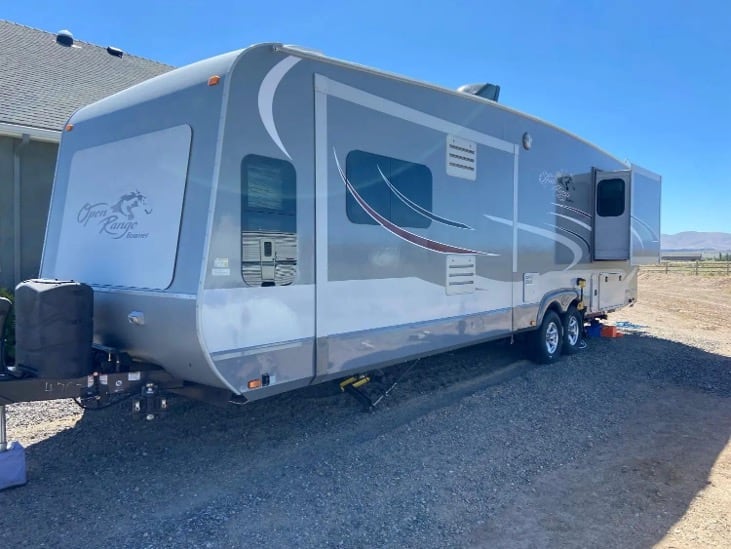
1. Plan Your Route Without Overloading the Schedule
Start with the places you genuinely want to visit, then build a route around them. Allow enough time for scenic detours, unexpected weather and the occasional stop that turns out to be better than expected.
Check road restrictions before heading into remote areas. Narrow lanes, low bridges, steep gradients and weight limits can make certain routes unsuitable for larger motorhomes. Download offline maps before leaving areas with reliable mobile coverage, and identify fuel stations and shops along the way.
Route-planning checklist
- Check height, width, weight and road-access restrictions for your motorhome.
- Download offline maps and save key destinations before losing mobile coverage.
- Mark fuel stations, grocery shops and water or waste facilities along the route.
- Leave room in the schedule for weather changes and unplanned detours.
2. Find Overnight Stops That Suit Your Needs
Not every night has to be spent far from civilization. Mixing remote stopovers with occasional campsite visits can give you the best of both worlds. Check local rules before parking: a quiet car park does not automatically permit overnight stays, and restrictions vary by location. Look for authorized motorhome areas or campsites that suit your plans.
Before settling in, consider the ground conditions, weather exposure and available facilities. A level parking space makes sleeping more comfortable, while a sheltered position can help in windy conditions. In summer, shade may keep the interior cooler, although it can also reduce solar-panel output.
Think about your needs the following morning. Plan to refill the water tank or dispose of waste before supplies run low, and leave each location clean.
Before you settle in
- Confirm that overnight parking is permitted and check any posted restrictions.
- Choose stable, reasonably level ground and consider wind, shade and exposure.
- Check access to drinking water, toilets and waste-disposal points if needed.
- Keep a backup stop in mind in case your first choice is unavailable.
3. Keep the Interior Comfortable
Temperature control can make a bigger difference than many first-time motorhome travelers expect. During colder months, inspect window seals, use insulated blinds and check for draughts around doors. Thermal screens can reduce heat loss through windows, while suitable ventilation helps prevent condensation.
Moisture builds up through breathing, cooking and drying clothes. Open appropriate vents regularly, even when the weather is cold, and avoid letting damp clothing accumulate inside the living area.
In warm weather, use roof vents and fans to move air through the vehicle. Parking in shade can help, but consider the trade-off if your solar panels need direct sunlight.
Check your heating system before departure, including its fuel supply and safety features. Never use a barbecue or outdoor-only heater inside a motorhome. Carbon monoxide can be fatal, so use only equipment designed for the intended indoor application and follow the manufacturer's instructions.
4. Make Meals Simple and Flexible
Cooking becomes much easier when you know what is available in your cupboards. Stock up on versatile ingredients such as pasta, rice, oats, tinned vegetables and beans. These keep well and can form the basis of several different meals.
Preparing a few dishes at home can save time after a long drive. Soups, sauces and stews are easy to portion and reheat, provided they are cooled, stored and transported safely.
Your cooking method also affects electricity consumption. A gas hob may be more practical than an electric kettle or induction hob when battery capacity is limited. If you rely on electric appliances, include their energy requirements in your daily calculations.
Keep the fridge organized, minimize unnecessary door opening and buy fresh food according to your itinerary. This reduces waste and avoids the need to find a supermarket every day.
5. Choose a Battery That Can Handle the Journey
Your leisure battery powers many of the essentials that make a motorhome feel like home, including lights, refrigeration, water pumps and device charging. Choosing the right capacity starts with estimating how much electricity you use in a typical day.
Estimate your daily energy use
For example, a fridge drawing 40 W while its compressor is running, with a total compressor runtime of 8 hours per day, uses about 320 Wh per day. Add LED lights at 20 Wh, a water pump at 30 Wh, phone charging at 40 Wh and a fan at 120 Wh, and the total is about 530 Wh per day. This is an illustrative estimate; actual consumption varies by appliance, usage and conditions. Add a sensible reserve for unexpected demand and account for inverter and charging losses where relevant.
When comparing motorhome batteries, look beyond the advertised capacity. Consider usable energy, weight, expected service life, charging compatibility and the temperature range in which the battery can operate.
Check battery type and cold-weather limits
LiFePO4 batteries are popular for off-grid travel because they combine relatively low weight with a long cycle life when used correctly. However, cold weather requires special attention. Some lithium batteries restrict charging when their cells are too cold, even if they can still supply power.
If winter travel is part of your plans, check the manufacturer's minimum charging temperature and available low-temperature protection. A self-heating feature may help under suitable conditions, but it does not eliminate the need to follow the specified charging limits.
Plan for higher power demands
Remote workers and travelers who use larger appliances often need more storage than those running only lights and a refrigerator. Check both the battery capacity and the amount of power the system can deliver at one time. A larger battery does not automatically solve every power problem: the charging system must be able to replenish it, and the battery must support the current demanded by your appliances.
The LiTime 24V 230Ah LiFePO4 battery is one option to investigate when considering higher-capacity storage. Its self-heating feature may be useful for cold-weather applications when operated within the manufacturer's requirements.
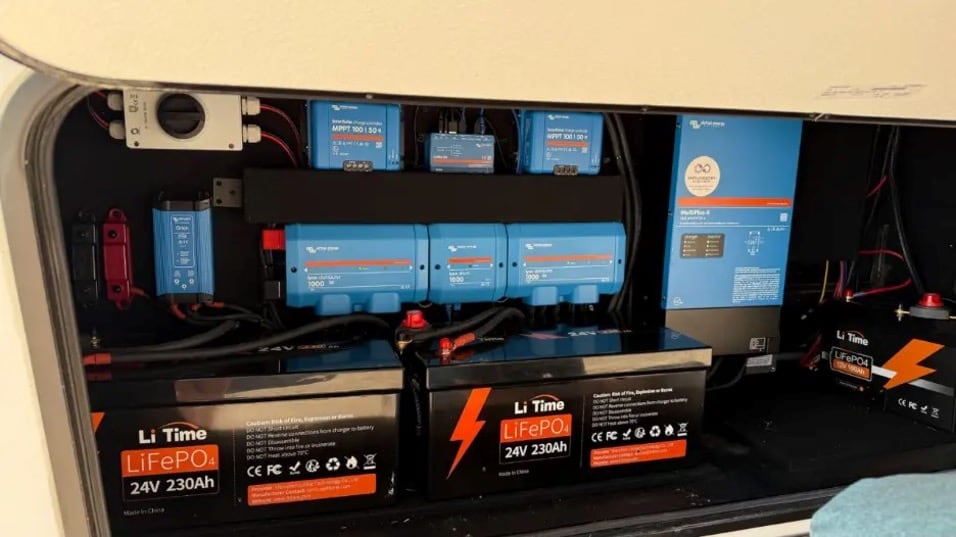
Important: This battery requires a compatible 24V electrical system. It is not a direct replacement for a standard 12V leisure battery. Confirm compatibility with your inverter, solar controller, charger and other equipment before purchasing. Any necessary electrical-system changes should be assessed by a qualified installer.
Before you leave
- Fully charge the battery using an approved charger and inspect its connections.
- Check that the battery monitor works and that you understand its readings.
- Confirm the battery, inverter, solar controller and charger are compatible.
- Estimate daily energy use and leave a reserve for poor weather or extra demand.
6. Make Solar Charging Work for You
Solar panels can replenish your battery while the motorhome is parked, reducing your dependence on campsites with electrical hookups. Their output varies with sunlight, shading, panel orientation and the season.
Compare your estimated daily consumption with the energy your panels are likely to produce, allowing for charging losses and cloudy days. This is the next step after choosing battery capacity: storage gives you a reserve, while solar charging helps replace the energy you use.
Improve solar charging
- Park where panels receive as much unobstructed sunlight as practical.
- Remember that trees, buildings, panel orientation and winter daylight can reduce output.
- Use a compatible solar charge controller to manage power reaching the battery.
- Consider a compatible DC-DC charger to use energy from the vehicle's alternator while driving.
Do not assume that one sunny afternoon will always restore a depleted battery. During winter or extended periods of poor weather, reduce consumption, drive to recharge where appropriate or use a compatible mains charger at a campsite.
7. Pack for the Unexpected
A small backup kit can prevent minor problems from disrupting the entire trip. Carry a torch, first-aid supplies, a tire-pressure gauge, correctly rated spare fuses and basic recovery equipment. Keep extra drinking water available when travelling somewhere remote.
A charged power bank can provide emergency phone power, while a compatible portable solar panel may offer another charging option. Check the weather forecast, tell someone your plans for particularly isolated journeys and identify possible alternatives if your intended route becomes inaccessible.
Conclusion
A comfortable off-grid motorhome trip comes down to planning around your actual needs. Choose manageable routes, find suitable overnight stops, keep meals straightforward and prepare the interior for the weather.
Most importantly, make sure your battery, solar panels and charging equipment work together as a system. With realistic energy expectations and a few sensible backup options, you can spend less time worrying about power and more time enjoying the places you came to explore.









Write Your Comment
Please DO NOT include links, URLs or HTML in your comments - they will be automated deleted and you will waste your time.