Quick answer, no fluff: a rental car wins on flexibility and cost the moment there are more than two people traveling together.
Grab and taxis are fine for short hops. Scooters? Only for riders who actually know what they're doing. Phuket never built a proper bus network or a metro to string its beaches together, so transport isn't some minor logistics box to tick – it shapes the whole trip. Get it wrong, and a day disappears into taxi queues and haggling under a sun that doesn't care about your schedule. Get it right, and the island actually opens up – cliffs above Kata, quiet fishing villages tucked along the east coast, the works.
So which one's worth it? Depends. Distance, budget, how much patience anyone has left for negotiating fares mid-afternoon in 34-degree heat – that all factors in. Here's how the main options actually compare.
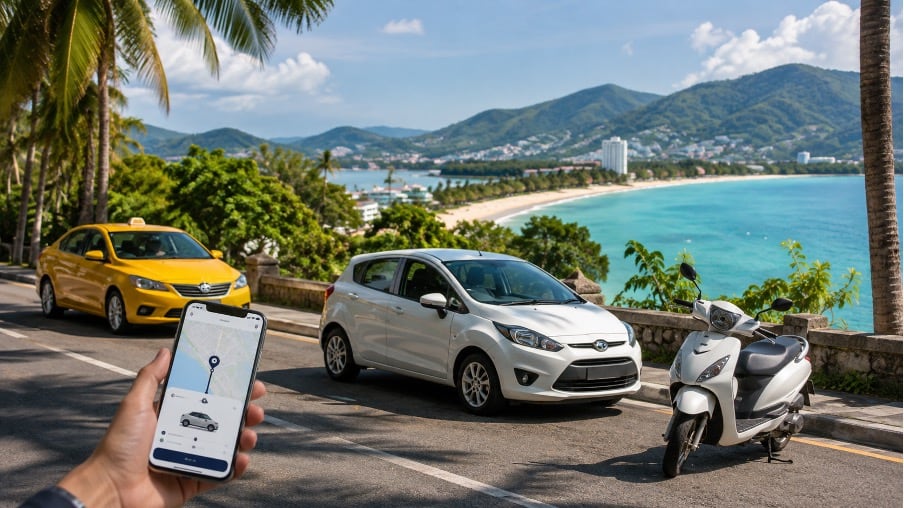
Taxis and Grab: Convenient, Not Cheap
Metered taxis are basically a myth in Phuket. Most run on fixed fares set by local taxi associations, and those numbers climb fast on longer routes – the airport-to-Patong run being the classic example. Grab solves the haggling headache since the price locks in before the car even shows up, which makes it the easier call for anyone who isn't fluent in negotiating-in-Thai. The catch? Availability. During peak hours, or the second it starts raining (and in Phuket, it will start raining), cars vanish and surge pricing kicks in – same story as anywhere else, really.
For one airport transfer or a night out, taxis or Grab do the job. For hopping around the island over several days, though, the costs stack up quicker than expected – and that's exactly where a Phuket rent a car starts making a lot more sense. One flat daily rate beats a dozen separate fares, and there's no waiting around hoping a driver accepts the ride.
Scooters: Freedom, With a Catch
Scooters are everywhere. Renting one is cheap and almost suspiciously easy – sometimes it's just a passport handed over as deposit, no license check in sight (which, honestly, is part of the problem). Thailand's road fatality numbers are among the highest in Southeast Asia, and a sizable chunk of those accidents involve rental scooters and tourists who've never dealt with monsoon downpours, sudden gravel patches, or traffic that doesn't follow the rules they're used to back home.
Anyone who's ridden before, holds a valid motorcycle license, and sticks to the quieter roads – go for it. Beginners, families with kids, anyone lugging shopping bags or suitcases around? Probably not the move.
Renting a Car: The Practical Middle Ground
A car sits right between the two extremes. More freedom than a taxi, way more safety and comfort than a scooter. A few things worth knowing before booking one:
- Driving side: Thailand drives on the left – same as the UK, Japan, Australia. Most people adjust within a day; roundabouts remain the tricky part for everyone, no exceptions.
- Documentation: An International Driving Permit (IDP), alongside a home license, is legally required for foreign drivers. Checkpoints do stop tourists to verify this – it's not just a formality on paper.
- Roads: Main routes are well paved. Hill roads near Kata and Karon get steep and narrow fast, and rainy-season flooding slows things down in the lower areas.
- Parking: Hotels and beaches almost always have free or cheap parking – unlike the scramble for a spot in denser Southeast Asian cities.
- Insurance: Confirm exactly what's covered before driving off the lot. This is the one detail travelers regret skipping, over and over.
For families, couples splitting the bill, or anyone planning a loop past temples and quieter beaches, a car usually ends up cheaper per person than repeated Grab rides – and it removes the daily gamble of finding a ride at all.
Matching Transport to the Trip
A rough guide, since needs genuinely vary traveler to traveler:
- Solo, short stay, beach-only – Grab or taxi covers it, no complications needed.
- Couples or small groups exploring widely – a rental car pays for itself within two or three days.
- Confident riders wanting flexibility on a budget – a scooter, with a real license and proper gear, not flip-flops and a helmet that doesn't fit right.
- Families with children or heavy luggage – a car. Not much debate there.
None of this is set in stone. Someone parked in Patong the whole trip might never need wheels at all. Someone chasing sunsets across the west coast will want their own transport most days, no way around it.
Final Thoughts
Phuket rewards travelers who push past the resort strip, and transport ends up being the deciding factor in how much of the island they actually see. Taxis and Grab handle the basics well enough – nothing wrong with that. Scooters offer real freedom but demand genuine skill and a healthy respect for local traffic (not everyone has both). For anyone planning to cover real ground – waterfalls inland, viewpoints along the cliffs, the calmer beaches away from Patong – a car stays the steadiest, most predictable option, and often the cheapest once the days start piling up. Choosing well early on tends to matter more than most people expect.










Write Your Comment
Please DO NOT include links, URLs or HTML in your comments - they will be automated deleted and you will waste your time.